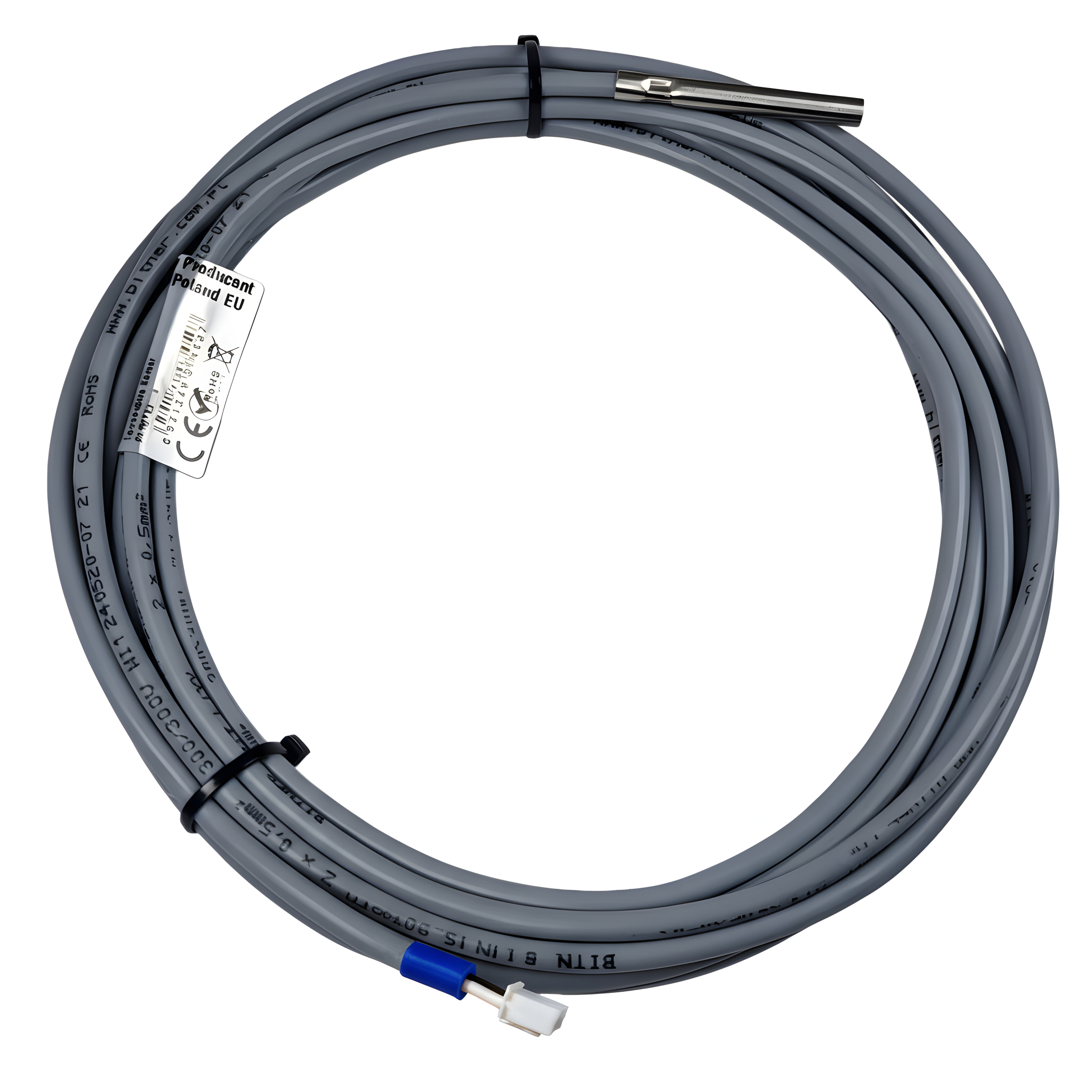
1 Purpose and Functions
The sensor is used for precise temperature measurement in heating and cooling systems. It ensures reliable operation and easy integration with heat pumps.
Main features:
- ✔ Wide probe measuring range (-40°C to +400°C)
- ✔ Highest IP68 ingress protection class (silicone seal)
- ✔ Durable Stainless Steel shield
- ✔ High-quality insulated copper control cable
- ✔ Completely maintenance-free after proper installation
Operating principle:
The sensor continuously monitors ambient or medium temperature, and the heat pump control system automatically reads the values from it. Thanks to precise data, the heating system can optimally manage heat production, protecting the installation and ensuring maximum thermal comfort for users.
2 Technical Specification
| Probe measuring range | from -40°C to +400°C |
| Cable operating temperature | from -40°C to +80°C (fixed installation) |
| Ingress protection class | IP68 |
| Probe shield material | Stainless Steel |
| Cable type | Copper control cable |
| Moisture protection | Internal silicone seal |
| Main application | Heat pumps (DHW, buffer, outdoor) |
| Power requirement during assembly | Completely disconnected |
| Minimum bending radius | 4 times the cable diameter |
| Interference resistance | Required distance from 230V/400V cables |
| Daily operation | Maintenance-free device |
3 Installation and Configuration
General rules and connection:
Before starting any work, ensure that the heat pump power supply is completely disconnected. Route the cable to the control unit and plug it into the appropriate socket on the device's main board (in accordance with the electrical diagram).
Probe positioning:
The device allows for various installation options depending on system requirements:
- Installation in a tank (DHW/Buffer): Insert the sensor metal sleeve into the dedicated thermowell (measurement pocket) until it stops. Using thermal conductive paste is recommended for better readings.
- Installation on pipes or outdoors: Press the probe flat against the pipe, secure it with a strap and insulate thermally, or mount in a location sheltered from sun and rain (as an outdoor sensor).
Connection to the main board should always be performed by a qualified installer with appropriate certifications.
4 Connection Diagrams and Safety
To ensure maximum safety and device longevity, strictly adhere to the rules regarding cable routing and mechanical handling of the sensor during installation.
Cable routing
Rules to prevent signal cable interference and damage.
- Avoid routing the cable in parallel with 230V/400V lines.
- Do not bend the cable at a right angle anywhere.
- Maintain the minimum bending radius (4 times the diameter).
Mechanical probe protection
Precautions to prevent physical damage to the sensor.
- Never pull the cable to extract the probe from a pocket.
- Jerking may damage the internal silicone seal.
- Damage results in sensor failure due to moisture ingress.
⚠ SAFETY NOTE
Never shorten or extend the cable without explicit instruction from the device manufacturer. Such modifications can permanently change circuit resistance, which will distort temperature readings and disrupt the entire heat pump's operation.
5 Set Contents
- 1x Temperature sensor with copper cable
- 1x Integrated stainless steel shield
- 1x Connection plug (depending on model)